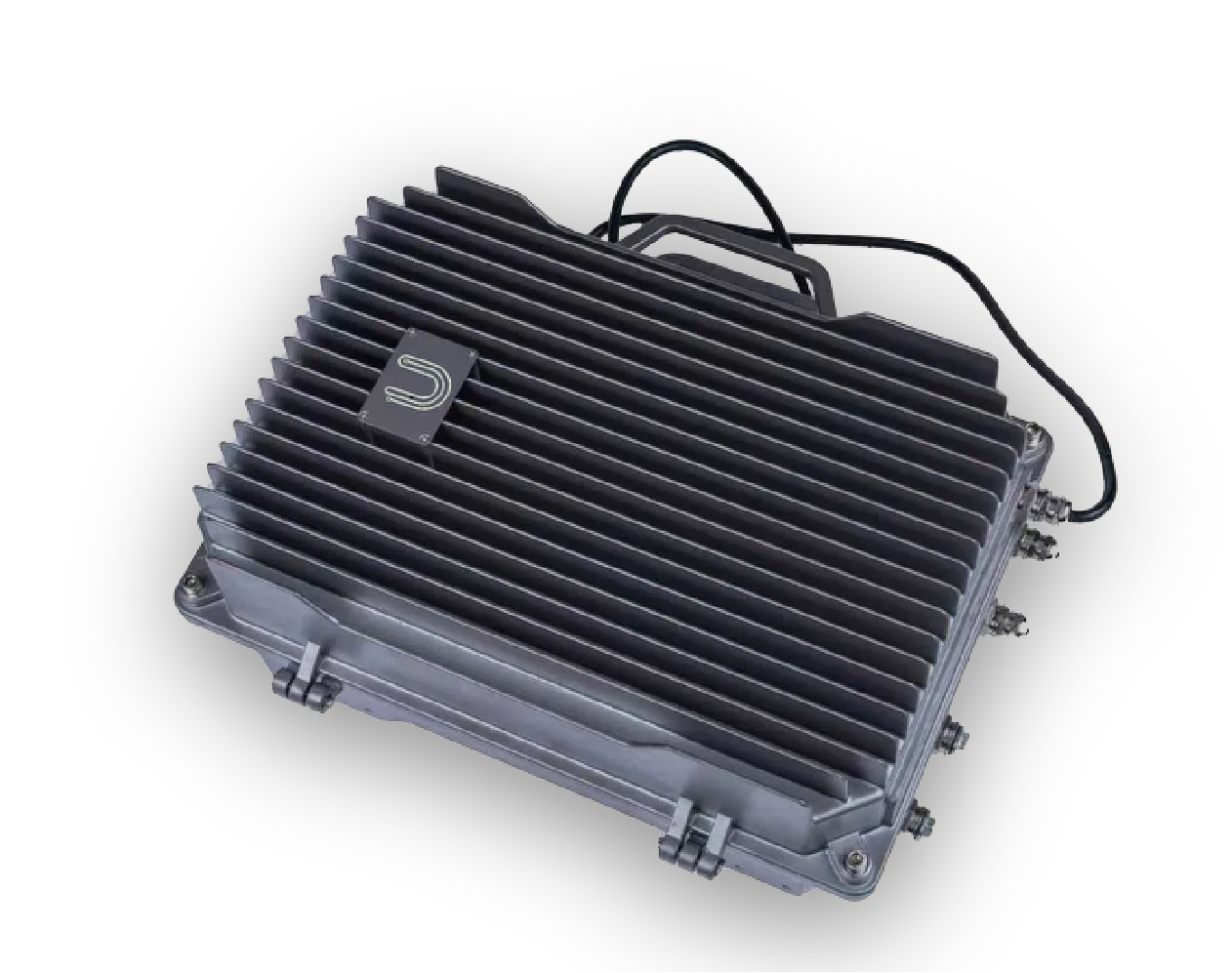
The U8 is an outdoor GPON OLT that combines an 8-port GPON OLT, an 8-way EDFA optical amplifier and a splitter in one IP65 enclosure — every output carries GPON together with the amplified 1550 nm CATV signal, for triple-play FTTH without extra outdoor cabinets.
The built-in amplifier takes the headend's 1550 nm CATV signal and delivers it with GPON on all 8 outputs — 13–22 dBm per output, C/N ≥ 50 dB, pump laser auto-shutdown.
Dust- and water-proof metal shell with natural heat dissipation — no fans — for floor boxes, corridors and poles, rated −40 °C to +70 °C.
Eight GPON SFP ports at 1:128 maximum split — up to 1,024 ONTs — with Class B+, C, C+, C++ and C+++ PON modules and 20 km reach.
2× 10GE SFP+ and 2× GE SFP uplinks on a 104 Gbps backplane, with static routing, RIP, OSPF and BGP, ARP proxy and IP source guard.
AC 100–240 V with a single power module or dual redundant modules, or 24 V DC input — 45 W consumption with surge protection.
CLI (console / Telnet / SSH), Web and SNMP; online ONT configuration over OMCI, alarm management and a power-off alarm for fast fault detection.
One pole- or corridor-mounted node serves a neighborhood: data and VoIP arrive on the 10GE uplinks, CATV on 1550 nm, and each output feeds splitters up to 1:128.
Internet, VoIP and television on a single fiber: subscribers use a GPON ONT with a CATV RF output for the TV side — no separate amplifier plant to build or power.
A sealed, fanless node for campuses and MDUs where an equipment room is not available — dual power redundancy keeps the node up through a supply failure.
The full optical and control architecture, redrawn from the U8 datasheet (R01), Figure 2: the EDFA chain with dual pump lasers and their cooling / power-stability control loops, input and output test points, the CPU control plane, and the output stage where each amplified CATV branch meets its GPON port in a WDM.
1550 nm video enters once, is amplified by the EDFA and split eight ways — no separate amplifier or cabinet in the field.
The OLT's eight PON ports meet the CATV branches in the WDMs, so each of the 8 outputs carries GPON and CATV together to its splitter and subscribers.
Output power is held within ±0.25 dB in ACC / APC mode, with pump auto-shutdown for protection; the node is managed over CLI, Web, SNMP and SSH.
Every value below is from the official U8 datasheet (R01). C/CTB, C/CSO and C/N are measured at 3 dBm EDFA input over an optical link comprising the optical transmitter and receiver.
| Chassis & interfaces | |
| Enclosure | Outdoor metal shell box; natural heat dissipation, no fans |
|---|---|
| Ingress protection | IP65, dust- and water-proof |
| Deployment | Floor boxes, corridors and poles |
| PON ports | 8× GPON (SFP slots) |
| Optical outputs | 8× combined GPON + CATV; SC/APC or SC/UPC (specify when ordering) |
| CATV input | 1× optical input from the CATV optical transmitter |
| Uplink ports | 2× 10GE SFP+; 2× GE SFP |
| Management ports | 1× 10/100/1000BASE-T out-of-band, 1× console (RJ45) |
| GPON port | |
| Standard | ITU-T G.984.x |
| Line rate | Downstream 2.488 Gbps, upstream 1.244 Gbps |
| Wavelength | TX 1490 nm, RX 1310 nm |
| Connector / fiber | SC/UPC (PON SFP); 9/125 µm single-mode fiber |
| Transmission distance | 20 km |
| Max. split ratio | 1:128 (up to 1,024 ONTs) |
| Supported PON module class | B+, C, C+, C++, C+++ |
| EDFA optical amplifier | |
| Working wavelength | 1535–1565 nm |
| Input optical power | −3 to +10 dBm (ACC mode); −6 to +10 dBm (APC mode) |
| Output optical power | 13–22 dBm per output (specify when ordering) |
| Output power stability | ≤ ±0.25 dB |
| Noise figure | ≤ 5.0 dB (at +3 dBm input) |
| Return loss (input / output) | ≥ 45 dB |
| Pump light leakage (input / output) | ≤ −30 dBm |
| C/CTB · C/CSO · C/N | ≥ 63 dB · ≥ 62 dB · ≥ 50 dB |
| Protection | Pump laser auto-shutdown |
| Performance | |
| Backplane bandwidth | 104 Gbps |
| Port forwarding rate | 65.472 Mpps |
| Management modes | CLI (console / Telnet / SSH), Web, SNMP |
| Power | |
| AC input | 100–240 V, 50/60 Hz; rated 110 V / 220 V |
| DC input | 24 V (alternative to AC input) |
| Power configurations | 1× AC · 2× AC (redundant) · 24 V DC |
| Power consumption | 45 W |
| Surge protection | Supported |
| Physical & environmental | |
| Dimensions (L × W × H) | 450 × 384 × 180 mm |
| Weight (gross) | 20.5 kg (dual power supply); 18.3 kg (single power supply) |
| Operating temperature | −40 °C to +70 °C |
| Storage temperature | −40 °C to +85 °C |
| Relative humidity | 5%–95%, non-condensing |
| GPON | |
| Standard & management | ITU-T G.984.x, OMCI; T-CONT DBA; GEM port traffic shaping |
|---|---|
| ONT handling | ONU auto-authentication; online ONT configuration and management |
| Layer 2 switching | |
| MAC address table | 32K |
| VLAN | 4,096 VLANs; port VLAN; tag / untag / transparent transmission; VLAN translation and QinQ |
| Spanning tree & aggregation | IEEE 802.1D STP and 802.1w RSTP; static link aggregation and LACP |
| Port controls | Storm control, port rate limiting, port isolation, 802.3x flow control, port statistics and monitoring |
| QoS & ACL | QoS based on port, VID, ToS and MAC address; access control lists |
| Layer 3 routing & IPv6 | |
| Routing | Static routing, RIP, OSPF, BGP; ARP proxy |
| IPv6 | NDP; IPv6 ping, Telnet and routing; ACL on source / destination IPv6 address, L4 port and protocol type; MLD v1/v2 snooping |
| DHCP & multicast | |
| DHCP | DHCP server, relay and snooping; DHCP Option 82 |
| Multicast | IGMP snooping and IGMP proxy; 1,024 IP multicast groups |
| Security & reliability | |
| Authentication | RADIUS and TACACS+; IP source guard |
| Isolation & filtering | VLAN division and user separation; flexible packet filtering by ACL and SNMP; broadcast-storm resistance |
| Alarms | Power-off alarm for fast link fault detection; system breakdown-prevention design |
| Management | SNMP, Telnet, CLI, Web, SSH; port status monitoring and configuration; user and alarm management |
PON SFP modules from Class B+ to C+++ let one node design cover short in-building drops and 20 km rural spans alike.
Build the part number from the power supply, power cord, optical connector and EDFA output power. Example: U8-A2-US-SA-P22 — outdoor GPON OLT with integrated 8-way EDFA (22 dBm per output), 8× GPON (SFP), 2× 10GE SFP+ + 2× GE SFP uplinks, 2× AC power supply, US power cord, SC/APC outputs.
GPON SFP modules (C++ / C+++), 1G SFP and 10G SFP+ modules are ordered separately.
Both are UGrid GPON OLTs. The U5 family lives indoors, in a rack or on a desk; the U8 takes the OLT outside — and adds the EDFA that CATV overlay needs. For 10G PON, see the U10 combo OLT.
| U8 | U5 Series | |
|---|---|---|
| Form factor | Outdoor IP65 node, fanless — floor box, corridor, pole | Desktop (U5-1) or 1U rackmount, indoor |
| GPON ports | 8, fixed configuration | 1 / 4 / 8 / 16 by model |
| EDFA / CATV overlay | Integrated 8-way EDFA, 13–22 dBm per output | None — data / voice only |
| Power | 1× AC, 2× AC redundant, or 24 V DC | AC / DC configurations for equipment rooms |
| Operating temperature | −40 °C to +70 °C | −20 °C to +60 °C |
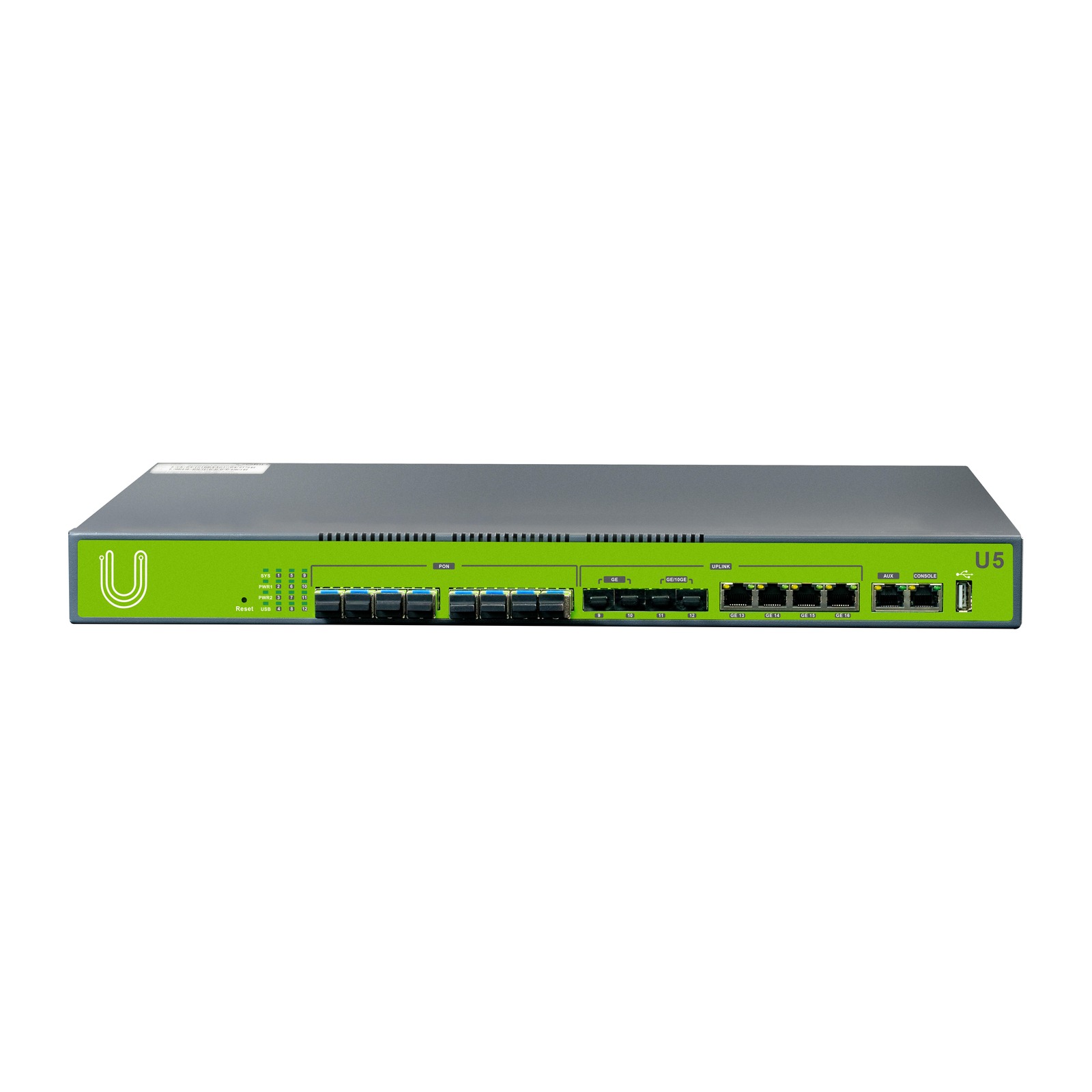
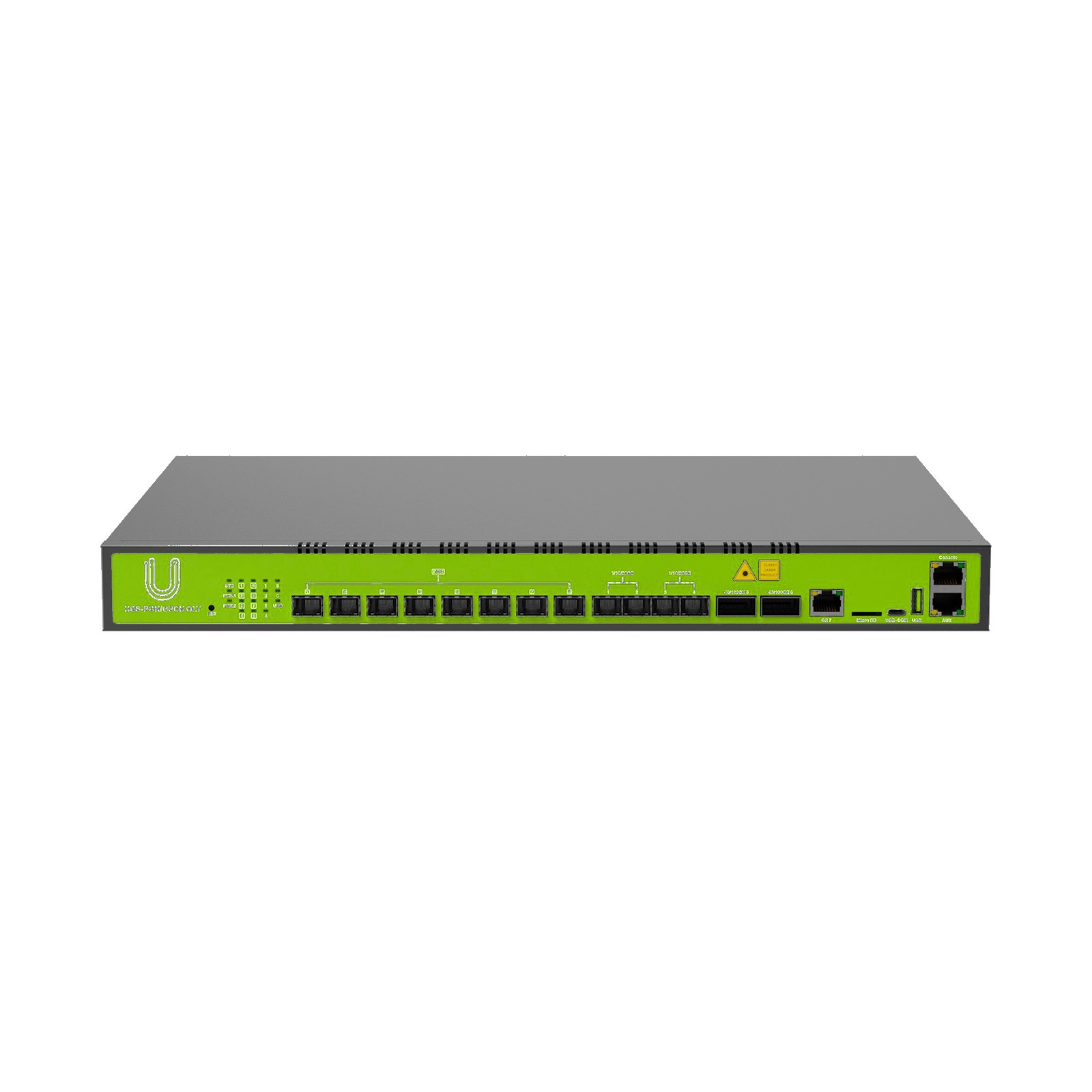
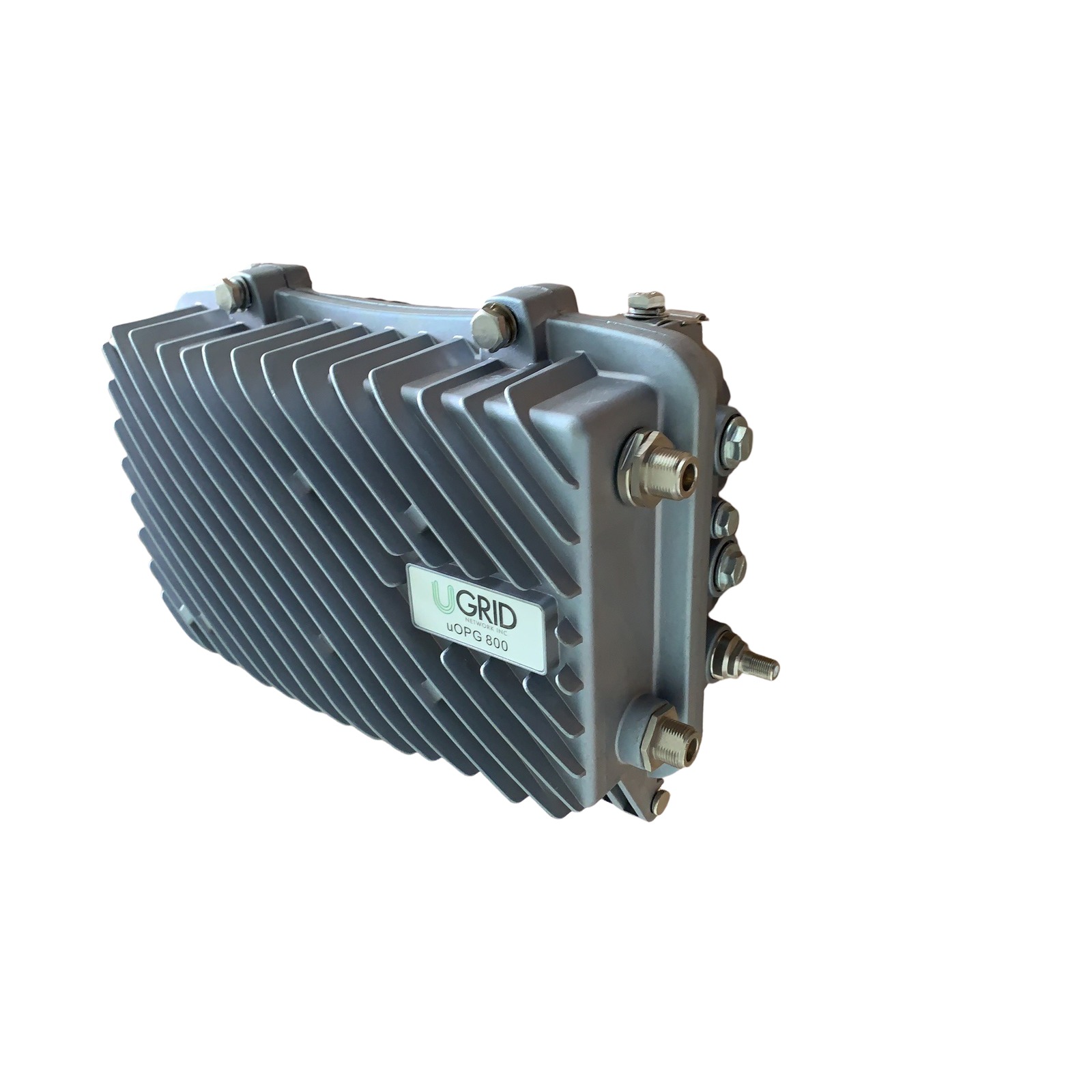
It is a GPON optical line terminal built for outdoor installation that also integrates an EDFA (erbium-doped fiber amplifier). The U8 combines an 8-port GPON OLT, an 8-way EDFA and an optical splitter in one IP65 enclosure, so every output carries GPON data together with the amplified 1550 nm CATV signal.
For CATV overlay: the headend's 1550 nm video signal is amplified once inside the node and delivered with GPON on all 8 outputs at 13–22 dBm each — no separate outdoor amplifier or extra cabinet, which simplifies the network and reduces engineering cost.
Up to 1,024 ONTs: 8 GPON ports at a maximum split ratio of 1:128 per port, over up to 20 km.
AC 100–240 V with a single power module or dual redundant modules, or a 24 V DC input. Power consumption is 45 W and surge protection is built in.
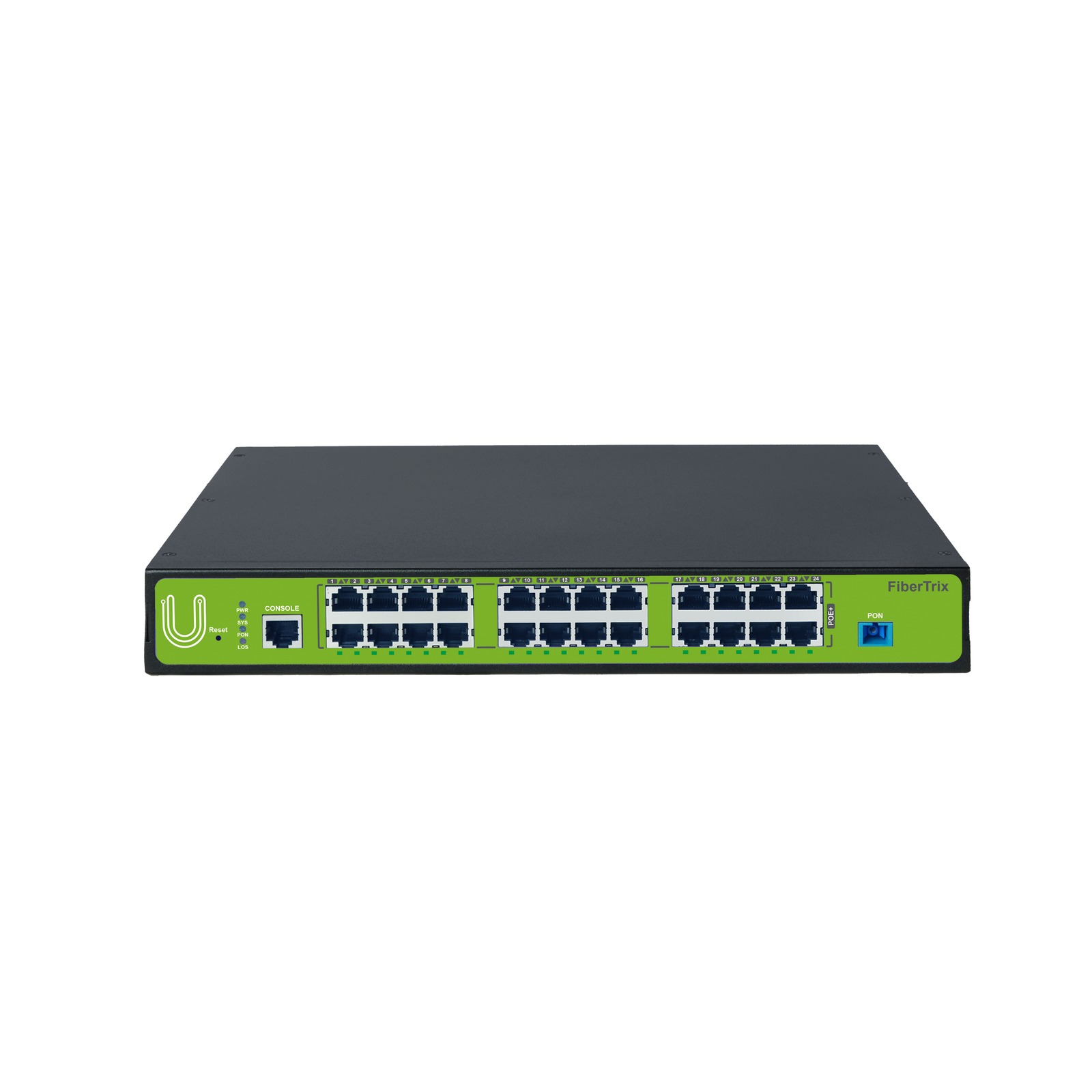
Any ITU-T G.984.x ONT managed over OMCI — including UGrid's UNT SFP sticks, FiberTrix MDUs and the uOPG800 outdoor gateway — with PON modules from Class B+ to C+++.
Tell us the split design, the CATV output power you need and the power configuration — our team typically responds within 2 business days.
Request a Quote